The Haldi Trap: Why the "Casual" Event Breaks the Most Weddings
Every Indian wedding has one event that catches everyone off guard. It's almost always the Haldi.
The logic going in seems reasonable. It's just close family. It's at home. It's informal. It doesn't need the same planning as the ceremony or reception.
Then the day arrives. Eighty people show up. There's nowhere to sit. Nobody knows what time things start. The bride is in the middle of the courtyard covered in turmeric paste while three conversations about the running order happen simultaneously around her. The photographer is trying to find a good angle but the lighting is wrong and nobody thought to check.
The Haldi is the most underplanned event in Indian weddings. Here's how to fix that.
Why the Haldi Gets Underplanned
The Haldi sits in a strange position in the wedding calendar. It's intimate enough that it doesn't feel like an "event" in the formal sense. But it's significant enough that 40 to 100 people show up, there are rituals to follow, photographs to take, and emotions running high.
Because it feels casual, couples allocate almost no planning time to it. No coordinator is assigned. No timeline is written. The catering is an afterthought. And then the day arrives and it becomes the most chaotic two hours of the entire wedding week.
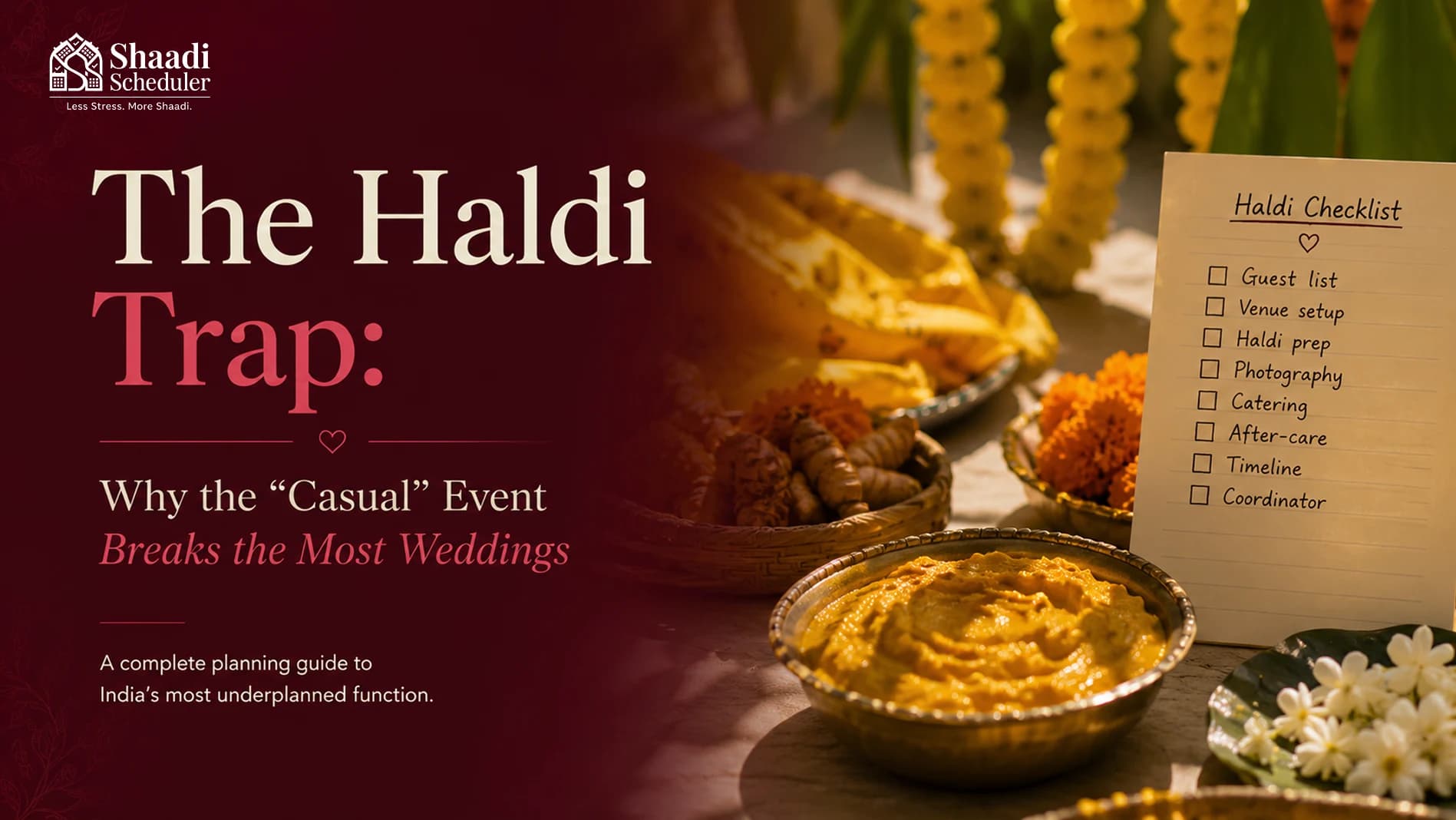
The Haldi Planning Checklist
| Category | What to Sort | Done |
|---|---|---|
| Guest list | Confirm who's invited — Haldi is usually close family only | ☐ |
| Venue setup | Outdoor vs indoor, floor seating, shade or cover if needed | ☐ |
| Haldi preparation | Fresh turmeric paste or ready-made, quantity based on guest count | ☐ |
| Outfit | Old clothes or designated Haldi outfit — confirm bride and groom | ☐ |
| Seating | Central spot for bride/groom, surrounding seating for family | ☐ |
| Photography | Confirm separately — most photographers need a brief for Haldi | ☐ |
| Music | Playlist or dhol — confirm in advance, not on the morning | ☐ |
| Catering | Light snacks and drinks — finger food, nothing messy | ☐ |
| After-care | Towels, change of clothes, shower access planned for bride/groom | ☐ |
| Coordinator | One person assigned to manage the event — not the bride or groom | ☐ |
| Rituals | Confirm family traditions — who applies first, any specific order | ☐ |
| Timeline | Written start time, ritual sequence, estimated end time | ☐ |
The Guest List Problem
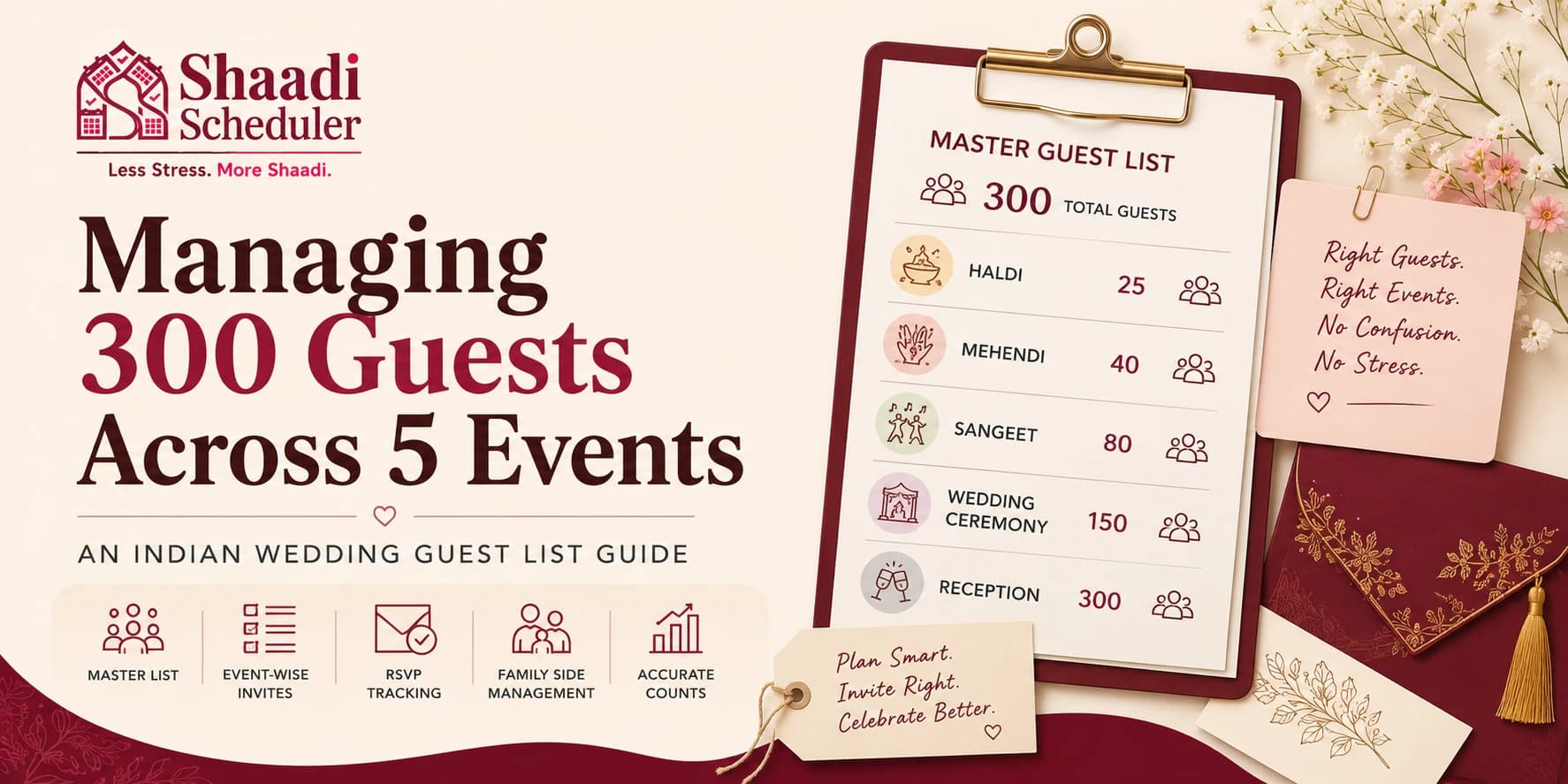
The Haldi guest list is where the "casual event" framing causes the most damage. Because it feels informal, nobody enforces a list. Word spreads. Extended family assumes they're included. Friends of family show up. What started as 25 people becomes 80.
This matters because the Haldi is physically intimate. The bride and groom are seated in the centre, often on the floor, while family applies turmeric. Too many people means crowding, no clear sightlines for photography, and a loss of the warmth that makes the Haldi meaningful.
Set a firm number early. Communicate it clearly. Close family only means close family only. If you're working through your full wedding guest list across events, our Indian Wedding Guest List Guide covers how to manage different subsets for different functions.
The Setup That Actually Works
The Haldi works best outdoors where turmeric stains aren't a disaster. If outdoors isn't possible, protect flooring and surfaces in advance — turmeric is permanent on most materials.
Seating should be low and central for the bride and groom — a decorated chair, a low wooden seat, or cushions on a raised platform. Family seating radiates outward. The photographer needs clear access from at least two angles.
Lighting matters more than most couples expect. A Haldi in harsh midday sun creates unflattering shadows in photographs. Morning light (before 10am) or overcast conditions work better. If the event is indoors, brief the photographer on the lighting situation in advance.
The Ritual Sequence
Every family does the Haldi differently. Some have a specific order — elders first, then parents, then siblings. Some have traditions around who applies the first application for the bride. Some include prayers or songs at specific moments.
Find out what your family expects before the day. Write it down. Share it with whoever is coordinating the event. A ritual that surprises the coordinator on the day causes delays and confusion at exactly the moment when things should feel smooth.
After the Haldi: The Part Nobody Plans
The hour after the Haldi is consistently the most chaotic. The bride and groom need to shower, change, and transition to the next part of the day. Family is still gathered. Food may still be happening. Nobody has a clear signal for when the event is over.
Plan this transition explicitly:
- Designate a clear end time for the Haldi itself
- Have towels, a change of clothes, and shower access arranged and ready
- Assign someone to manage the transition — moving guests to food and seating while the bride and groom clean up
- Build at least 45 minutes of buffer between the Haldi ending and the next event starting
How the Haldi Connects to the Rest of the Week
The Haldi typically happens one to two days before the wedding ceremony. Which means whatever chaos happens at the Haldi — whatever stress, whatever delays, whatever family friction — arrives on the wedding day with you.
A well-run Haldi sets the emotional tone for the rest of the week. It's intimate, joyful, and visually beautiful when it goes right. It's exhausting and destabilising when it doesn't.
It's worth the planning. ShaadiScheduler's AI Checklist generates a personalised Haldi checklist for your specific events and timeline — so the casual event gets the same attention as everything else. shaadischeduler.com
FAQs: Haldi Ceremony Planning
How many people should attend the Haldi?
Most families keep it to 20-50 close family members. Beyond that, the intimacy that makes the Haldi special starts to disappear, and the logistics become significantly more complex. Set a number and hold to it.
What do you wear to a Haldi?
Yellow is traditional and widely worn — it complements the turmeric and photographs beautifully. Old clothes or designated Haldi outfits are practical for guests who will be applying turmeric. The bride and groom should wear something they don't mind staining permanently.
Do you need a photographer at the Haldi?
Yes — but confirm separately with your photographer. Many wedding packages cover the ceremony and reception but treat the Haldi as an add-on. Haldi photographs are some of the most joyful and visually distinctive of any Indian wedding event. It's worth the additional coverage.
How long does a Haldi ceremony take?
Typically 1.5 to 3 hours, depending on guest count and family traditions. Build in time for the turmeric application, photographs, food, and the post-Haldi cleanup and transition. Don't schedule anything important within two hours of the expected end time.
Can the Haldi be combined with the Mehendi?
Some families do combine them, particularly for smaller weddings. The practical challenge is that both events have distinct vibes — the Haldi is physical and messy, the Mehendi is more composed and long. Combining them tends to compress both. If you have the time and the guest numbers to keep them separate, it's worth doing.
The Haldi doesn't need to be a production. It just needs a plan. Thirty minutes of advance thought prevents three hours of chaos on the day.