
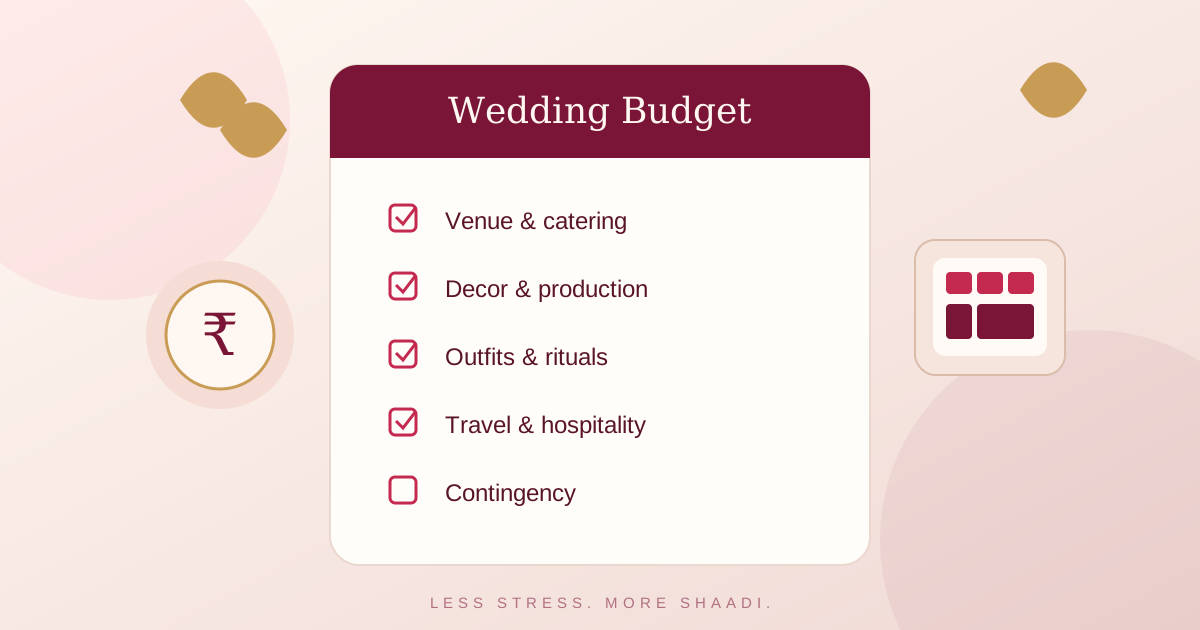
An Indian wedding budget is rarely just a venue, food and decor number. There may be several functions, different family contributions, guest travel, outfits, jewellery, vendors, gifts and costs that appear only after a decision has been made.
The goal of a wedding budget is not to predict every rupee perfectly on day one. It is to make the important costs visible, understand what is still uncertain, and catch trade-offs before they become expensive surprises.
Start with the amount you can actually spend
Before collecting venue quotes or saving inspiration, agree on a working budget ceiling. Separate money that is confirmed from money that is only possible. If different family members are contributing, record each contribution only when the amount and timing are clear.
Keep a contingency buffer for changes and unexpected expenses. The right buffer depends on how much is already confirmed and how much of the plan is still uncertain. Treat it as money set aside, not as extra room to spend automatically.
Use this Indian wedding budget checklist
- Venue and accommodation: venue rental, rooms, changing spaces, transport, parking, security deposits and overtime.
- Food and beverage: per-plate charges, minimum guarantees, service staff, live counters, water, tea and coffee, taxes and outside-catering fees.
- Decor and production: mandap, stage, flowers, lighting, furniture, sound, screens, power backup and setup or dismantling charges.
- Photography and entertainment: photo and video coverage, albums, drone or additional equipment where permitted, DJ, musicians, performers and emcee.
- Clothing and styling: outfits for each function, tailoring, accessories, footwear, makeup, hair, grooming and trial appointments.
- Ceremony and rituals: priest or officiant, ritual materials, offerings, ceremony-specific arrangements and any customary expenses relevant to your families.
- Invitations and guest experience: invitations, welcome kits, gifts, signage, hospitality desks and guest communication.
- Travel and logistics: airport or station transfers, local transport, vendor transport, loading, delivery and accommodation for key people.
- Planning and administration: planner or coordinator fees, permits where applicable, payment processing, printing and other operational costs.
- Personal and family expenses: jewellery, gifts, family outfits and any expenses your families have agreed to include in the shared plan.
Not every wedding needs every line. The checklist is a prompt to decide what belongs in your budget, not a list of things you must buy.
Budget by function, not only by category
If you have a Haldi, Mehendi, Sangeet, wedding ceremony and reception, build a view of each function as well as a combined total. A shared vendor may serve multiple events, while some costs apply only once.
For every function, record the expected guest count, venue, food plan, decor, entertainment, logistics and the people responsible for decisions. This makes it easier to see the cost of adding a function or changing its scale.
Track estimates, commitments and payments separately
A quote is not the same as a final cost, and a committed cost is not the same as money already paid. Use separate columns for:
- Estimated amount
- Quoted amount and quote date
- Confirmed or committed amount
- Advance paid
- Balance due and due date
- Final actual amount
Record what each quote includes. Check taxes, service charges, minimum guest guarantees, vendor meals, transport, setup windows, cancellation terms and overtime. Ask for unclear inclusions in writing before comparing options.
Make family contributions and shared expenses visible
Conversations about who pays for what can become confusing when decisions happen across calls and family chats. Keep a record of the agreed contribution, the expense it covers, the person coordinating it and whether the payment has been made.
Different families divide expenses differently. There is no single split that every couple should follow. What matters for planning is that everyone is working from the same understanding and that the same expense is not counted twice.
Stress-test the budget before locking decisions
Before paying a non-refundable advance, test a few realistic changes:
- What happens if the guest count increases?
- What if the venue or caterer quote changes after the final headcount?
- Can one function be simplified without affecting the parts that matter most to you?
- What happens if a family contribution arrives later than expected?
- Which costs are flexible, and which are already contractually committed?
Look at the total effect of a change, not just the price of the item being changed. A larger venue can affect catering, decor, transport and accommodation at the same time.
A simple wedding budget review rhythm
Review the budget whenever a major decision is made, whenever a quote becomes a booking, and at a regular interval while planning. Keep one shared version of the numbers. A short weekly review can cover new commitments, upcoming payments, changes in guest count and the remaining contingency.
Questions couples ask about Indian wedding budgets
When should we create a wedding budget?
Create a first working budget before making major bookings. It can begin with broad estimates and become more precise as you receive quotes and confirm decisions.
What is the most important wedding expense to track?
Track every expense that can materially affect your total. Venue, catering and guest-count decisions often connect to several other costs, so make their assumptions especially visible.
Should we include jewellery and gifts?
Include them if they are part of the spending plan you are trying to manage. If they are handled separately, label that boundary clearly so the shared budget is not mistaken for the full wedding-related spend.
Turn the checklist into a shared plan
A budget works better when it stays connected to guest counts, functions, decisions and responsibilities. ShaadiScheduler gives couples and families a shared place to track the plan and see how a change in one area can affect the rest.