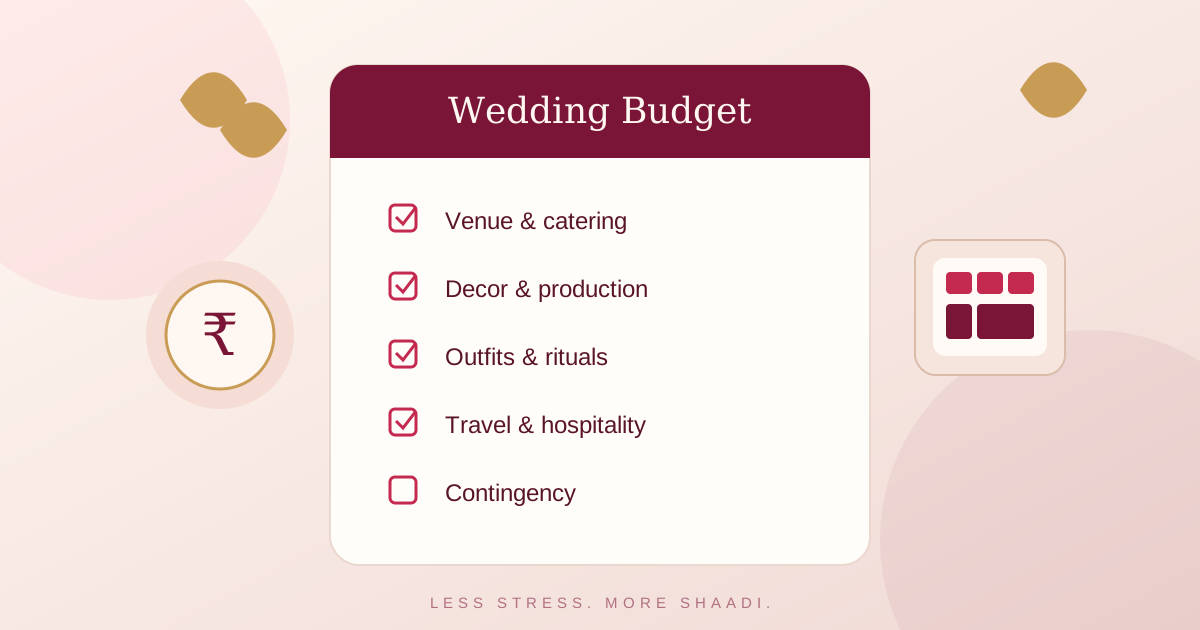

Before you book Indian wedding vendors, agree on a confirmed spending ceiling, reserve a contingency, list every function and its guest count, and compare complete written quotes. Pay an advance only when the total commitment and payment dates fit that plan. This checklist helps you make those decisions together before a beautiful venue or an attractive package sets the budget for you.
There is no single correct Indian wedding budget. A two-function wedding in Pune and a five-function destination celebration have different costs. Start with what your families can comfortably fund, then build a plan around it.
1. Agree on your budget ceiling and who pays
Write down confirmed savings and family contributions, when each amount will be available, and which expenses belong in the shared wedding budget. Discuss jewellery, gifts, outfits, honeymoon and guest travel explicitly. Keep possible gifts or unconfirmed contributions outside the amount you can commit.
Choose one person to maintain the plan and agree who approves changes. A useful family rule is: every addition needs an estimated cost and an agreed source of funds before a vendor receives approval.
2. Reserve contingency before allocating expenses
As a planning starting point, reserve 10% of your ceiling for unexpected costs. Increase the buffer if many quotes, room requirements or functions are still uncertain. This is a planning allowance, not an industry average or an invitation to upgrade.
Working allocation = confirmed budget ceiling minus contingency. For a ₹15 lakh ceiling and a ₹1.5 lakh reserve, allocate ₹13.5 lakh to the planned wedding. Keep the reserve visible so it is not quietly counted twice.
3. Use a complete budget checklist
The following ₹15 lakh example is illustrative, not a market-rate estimate. Replace each allocation with local quotes for your city, dates and requirements. Jewellery and honeymoon are excluded here; include them if your agreed ceiling covers them.
| Category | Example allocation | Check before booking |
|---|---|---|
| Venue and catering | ₹6,00,000 | Rental, menu, per-function headcount, minimum guarantee, staff, taxes |
| Decor, lighting and sound | ₹2,00,000 | Mandap, flowers, production, power, setup and dismantling |
| Photography and video | ₹1,50,000 | Coverage hours, team size, deliverables, travel, albums |
| Outfits, styling and makeup | ₹1,25,000 | Each function, alterations, accessories, trials |
| Rooms and transport | ₹1,00,000 | Room nights, transfers, vendor travel and meals |
| Rituals, invitations and gifts | ₹1,00,000 | Officiant, materials, stationery, hospitality, agreed gifts |
| Coordination and other planned costs | ₹75,000 | Coordinator, delivery, operational charges |
| Contingency | ₹1,50,000 | Held separately until a specific need is approved |
| Total ceiling | ₹15,00,000 | Includes the reserve |
For a broader list of expenses, use our Indian wedding expense checklist. For why costs drift after decisions, read the wedding budget breakdown guide.
4. Budget for each function and guest count
List Haldi, Mehendi, Sangeet, ceremony and reception only if they are part of your plan. Give each function its own expected attendance, food cost and fixed expenses. A photographer covering three functions may be one shared contract; do not count that package three times.
Separate invited, expected and confirmed guests using our guest-count planning guide. Contractual minimum guarantees can determine the bill even when fewer guests attend.
| Scenario | Reception guests | Food at illustrative ₹1,200 per guest | Change from base |
|---|---|---|---|
| Smaller | 200 | ₹2,40,000 | ₹60,000 less |
| Working plan | 250 | ₹3,00,000 | Base |
| Larger | 300 | ₹3,60,000 | ₹60,000 more |
This example covers food for one function only and excludes taxes and other charges. If the same 50 extra guests attend two functions at ₹1,200 each, food alone adds ₹1,20,000. Seating, rooms or a larger hall may add more.
5. Test trade-offs with ShaadiScheduler Scenario Lab
Before paying a non-refundable advance, use ShaadiScheduler's Scenario Lab to explore the effect of a guest-count change or a different event plan. Compare your working assumptions with a smaller and a larger scenario, then check the result against written vendor quotes. A scenario helps you discuss a decision; the supplier's contract determines the final bill.
For example, if adding 50 guests would consume most of your reserve, discuss reducing the menu, simplifying one function or increasing confirmed funding before approving the addition. Start your ShaadiScheduler plan and use Scenario Lab to make the trade-off visible to your family.
6. Compare full vendor quotes, not headline prices
Ask each shortlisted vendor for the same scope, event dates, headcount, hours and deliverables. Record exclusions alongside inclusions. A ₹2 lakh quote plus ₹40,000 of required extras costs more than an otherwise equivalent ₹2.3 lakh inclusive quote. Confirm applicable taxes in writing rather than assuming one rate applies to every package.
| Question | What to record |
|---|---|
| What is included? | Itemised scope, quantities, hours, staff and deliverables |
| What is extra? | Taxes, transport, accommodation, meals, overtime, setup |
| What can change? | Headcount deadlines, minimum guarantee, revision charges |
| When is payment due? | Advance, milestones, balance date, refundable deposits |
| What happens if plans change? | Written cancellation, postponement and refund terms |
Use the 17-question venue checklist to check vendor restrictions, outside-catering fees, rain backup and operational costs before signing.
7. Catch hidden costs and cash-flow gaps
- Check delivery, loading, power backup, cleaning, valet and overtime.
- Count outstation guest room nights and airport or station transfers.
- Include vendor meals, travel and accommodation where required.
- Record outfit alterations, makeup trials, printing and ritual materials.
- Separate refundable deposits from expenses while keeping them in the cash needed.
- Check whether several balances fall due in the same week.
A wedding can fit the total ceiling and still create a payment problem if funds arrive after advances are due. Compare payment dates with contribution dates before you commit.
8. Keep the plan current in Budget Tracker
Use ShaadiScheduler's Budget Tracker to keep estimated and actual spending connected across your wedding categories. Enter your working allocations before booking, then update them as quotes and decisions become firm. Keep advance receipts, balances and due dates alongside your vendor records so paying an advance does not make the remaining obligation disappear.
Review the plan after every major booking and guest-count change. Compare total expected spending with your ceiling, identify what remains uncertain, and check how much contingency is left. Build your wedding budget with ShaadiScheduler so your budget, guests and decisions stay part of one shared plan.
The checklist before your first advance
- Confirmed ceiling and contribution timing agreed.
- Contingency reserved and scope of shared expenses clear.
- Functions and guest-count scenarios listed.
- Complete quotes compared using the same scope.
- Hidden costs and payment dates checked.
- Written terms reviewed and change approver agreed.
- Budget Tracker updated with the proposed commitment.
Frequently asked questions
How do I set an Indian wedding budget before booking vendors?
Start with confirmed funds, agree which expenses are included, reserve contingency, and allocate the remainder by function and category. Obtain complete quotes and test guest-count changes before paying advances.
How much contingency should I keep?
Ten percent is a useful starting planning allowance, not a universal rule. Keep more if headcounts, travel or vendor costs are uncertain, and adjust only after reviewing the remaining risks.
Should jewellery and gifts be included?
Include them if they are funded from the same ceiling. If they are outside the shared wedding plan, record that agreement clearly so the total does not conceal those expenses.
Which vendors should I book first?
Prioritise date-dependent essentials such as the venue and key coverage vendors after checking their availability and complete costs. Do not let booking order replace a whole-wedding budget or a review of contract terms.
Can ShaadiScheduler help compare budget scenarios?
ShaadiScheduler connects Budget Tracker, guest planning and Scenario Lab. Use the tracker for estimated and actual spending and the lab to explore decision changes, then validate assumptions with vendor quotes before committing.
A useful budget lets you say yes with confidence. Agree on the ceiling first, test the decisions that can move it, and keep the plan visible before the next advance leaves your account.