
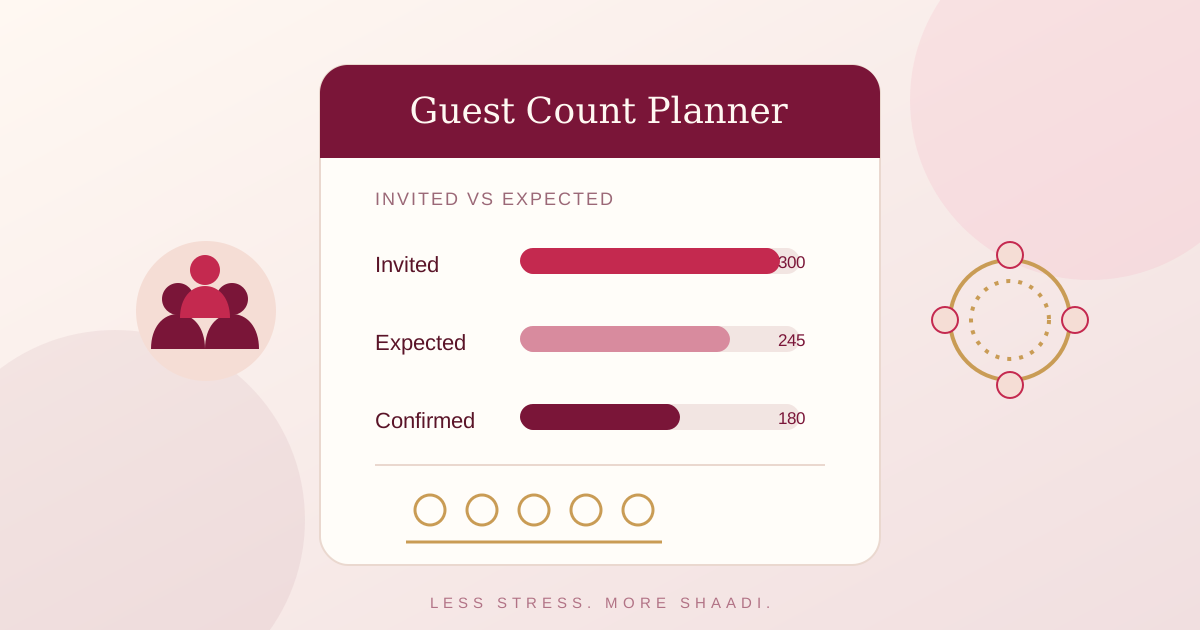
Guest count is one of the first numbers families discuss and one of the hardest numbers to keep stable. A list of names can quickly turn into households, plus-ones, children, outstation relatives, colleagues and guests invited to only some functions.
Instead of treating the guest list as one final number, separate who is invited from who is expected to attend. That distinction helps you plan catering, venue capacity, rooms and transport without pretending that every invitation has the same attendance likelihood.
First, keep three numbers separate
- Invited: the number of people you intend to invite to a particular function.
- Expected: your current planning estimate of how many people may attend.
- Confirmed: the number of people who have responded that they plan to attend.
These numbers answer different questions. Venue capacity and invitation planning depend on the invited list. Catering forecasts use an expected headcount and later become more precise with confirmations. Do not replace one number with another without recording the change.
Build the list in groups
Start with households or invitation units, then record the people included in each one. Useful groups might include close family, extended family, friends, work contacts, family friends and other circles that matter to you.
For each entry, capture the names or household, the number of people invited, which functions they are invited to, the contact person, RSVP status and any relevant logistics such as outstation travel or accessibility needs. Keep sensitive guest details limited to the people who need them.
A practical guest-count formula
For an early estimate, use this simple calculation for each function:
Expected attendance = confirmed attendees + (pending invitees × your estimated attendance rate)
The attendance rate is an assumption for planning, not a universal Indian wedding benchmark. Choose it based on what you know about your guests, travel distance, function timing, past responses and the amount of time remaining. Use different assumptions for different groups when there is a clear reason.
For example, suppose 120 people have confirmed and 200 invitees are still pending. If your working assumption is that 70% of the pending group will attend, your estimate is 120 + (200 × 0.70), or 260 people. Replace the assumption with actual responses as they arrive.
Calculate every function separately
A person invited to the wedding ceremony may not be invited to the Sangeet or reception. Even when the same guests are invited to multiple events, their likelihood of attending can differ by date, location and timing.
Maintain a separate invited, expected and confirmed count for each function. Do not add all function headcounts together to estimate the number of unique people attending the wedding. One guest may appear in several function totals.
Use scenarios when the number is uncertain
For major bookings, create a low, working and high scenario. The low scenario can reflect confirmed guests plus a conservative estimate of pending responses. The working scenario uses your current assumptions. The high scenario tests what happens if more of the pending list attends or late additions are approved.
Compare each scenario against venue capacity, catering minimums, seating, parking, room availability and transport. The purpose is not to guess the exact final count months in advance. It is to understand the consequences if the number moves.
Set a clear process for additions
Guest lists often grow through family requests. Make additions visible rather than quietly editing a number in a spreadsheet. Record who requested the addition, which function it affects, whether the invitation has been sent and what the change does to the expected count and budget.
Agree on who can approve additions and when the list will be frozen for vendor coordination. This keeps the conversation practical and gives everyone a shared view of the trade-off.
Do not forget the operational details
- Ask guests to respond for the correct function, not just the wedding overall.
- Track children and plus-ones explicitly where they affect seating or catering.
- Record dietary or accessibility requirements only when needed for planning and handle them respectfully.
- Keep a separate view of outstation guests who may need rooms or transfers.
- Confirm the caterer's deadline and rules for final headcount changes.
- Keep a small operational allowance if your vendors require one, but agree on how it is calculated and billed.
Questions couples ask about wedding guest counts
How many guests should we invite?
Start with the capacity and budget you can support, then build the list around the people you and your families want to include. There is no single correct guest count for every wedding.
Should we plan catering for everyone invited?
Use the caterer's contract and deadline requirements alongside your current expected attendance. Early in planning, keep scenarios rather than treating an uncertain estimate as a final guarantee.
When should we finalise the guest list?
Set internal milestones for invitations and responses, then follow the deadlines agreed with your venue and vendors. Keep track of late changes and confirm the final process with each supplier.
Keep guest count connected to the rest of the plan
A guest-list change can affect catering, venue size, rooms, parking and the budget. ShaadiScheduler helps couples and families manage invited versus expected guests alongside tasks, decisions and spending, so updates do not disappear into separate spreadsheets and chats.