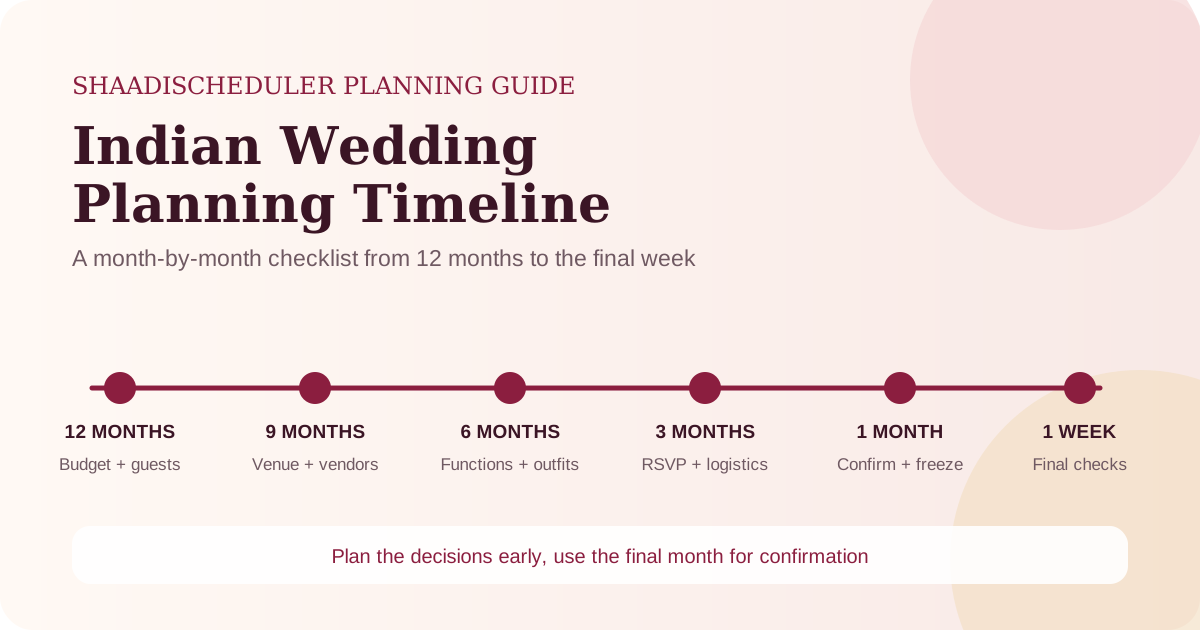
A practical Indian wedding timeline starts with the decisions that unlock everything else: budget, guest-count range, city, dates and venue. From there, book date-sensitive vendors, build each function, organise guests and payments, then use the final month for confirmations rather than major new decisions.
This month-by-month checklist uses a 12-month runway, but it is not a rule. If you have six months, compress the early phases and make decisions in parallel. If you have longer, use the extra time to compare options without paying advances before the plan is clear.
12 months before: define the wedding before booking it
- Agree on a working budget ceiling and who is contributing.
- List the functions you actually want, such as Mehendi, Haldi, Sangeet, ceremony and reception.
- Create an invited guest-count range for each function.
- Choose the wedding city or shortlist realistic locations.
- Identify preferred dates and any family, cultural or venue constraints.
- Decide who can approve major changes and spending.
Do not begin with a perfect spreadsheet. Begin with the few numbers that determine what is feasible. Our budget checklist before booking vendors can help you set the financial boundary before attractive packages start shaping the plan.
9 to 12 months before: shortlist and book the venue
Venue availability can determine your final date, capacity and vendor choices, so compare venues using the same requirements. Check the real capacity for each function, catering rules, outside-vendor restrictions, rooms, parking, setup access, sound limits, rain backup, overtime and cancellation terms.
Use the 17-question Indian wedding venue checklist before paying an advance. Record the total expected cost, not only the headline rental.
8 to 10 months before: lock the vendors that shape the day
Prioritise vendors whose availability or work affects many later decisions. Depending on what your venue includes, this may include:
- Wedding planner or coordinator
- Photographer and videographer
- Caterer
- Decorator and production team
- Makeup and hair artists
- DJ, musicians or entertainment
- Priest or officiant
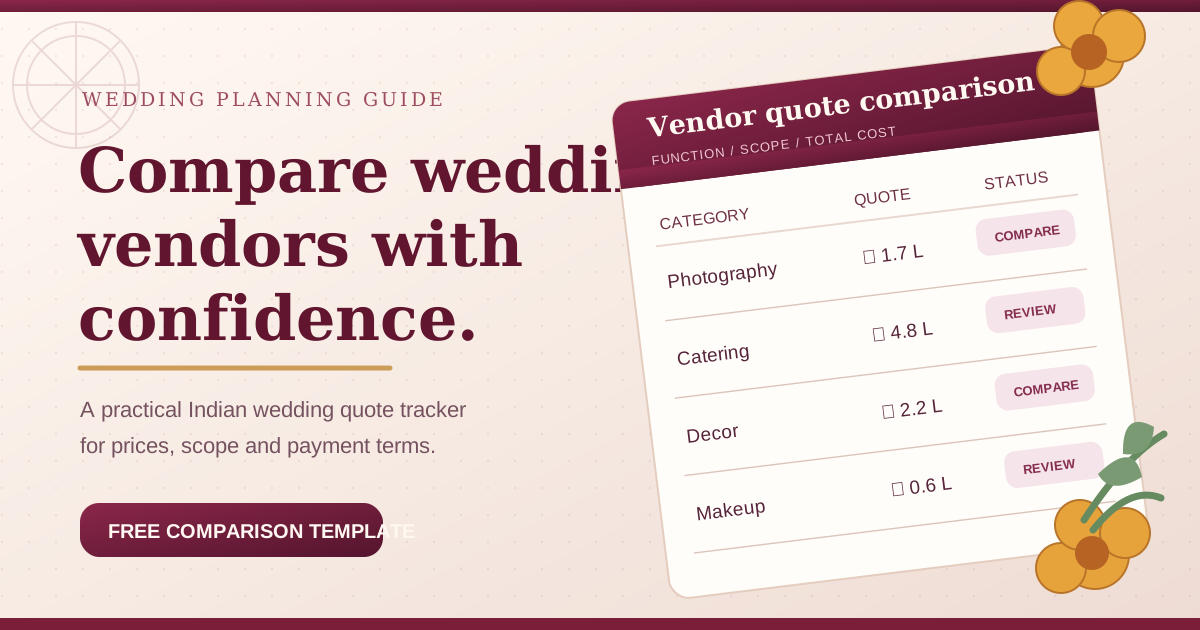
Compare complete written scopes. Before every advance, record the total, due dates, cancellation terms and deliverables. Use our vendor payment schedule guide to avoid several large balances landing in the same week.
7 to 9 months before: build the guest and travel plan
Create one guest record that distinguishes invited, expected and confirmed attendance. Track each function separately because your Sangeet and reception may have different lists.
Identify outstation guests early. Estimate room nights, airport or station transfers, elderly-access needs and any family hospitality responsibilities. Use the guest-count formula to test a low, working and high attendance scenario before committing to catering or room blocks.
6 to 8 months before: design each function as its own event
For every function, write down the purpose, guest count, venue space, start and finish time, food plan, decor direction, entertainment and key rituals. This prevents one large wedding mood board from hiding five separate operational plans.
| Function | Decisions to make | Dependencies to check |
|---|---|---|
| Mehendi | Guest list, artist capacity, seating, food, timing | Artist hours, indoor or outdoor setup |
| Haldi | Ritual flow, clothing, cleanup, photography | Venue cleanup rules, water access |
| Sangeet | Performances, stage, sound, rehearsals | Sound limits, production access |
| Ceremony | Ritual sequence, mandap, seating, family roles | Officiant, materials, venue timing |
| Reception | Entry, stage, food, speeches, entertainment | Final headcount, catering, transport |
5 to 7 months before: outfits, invitations and communication
Begin outfits early enough for sourcing, tailoring, fittings and changes, especially when several family members are coordinating looks. Decide whether physical invitations, digital invitations or both fit your guest groups.
For guests who need flights, visas or long-distance travel, communicate the date and city as early as practical. The formal invitation can follow once details are stable.
4 to 6 months before: turn ideas into confirmed scopes
- Approve decor direction and request an itemised scope.
- Confirm menus or schedule tastings where relevant.
- Define photography coverage by function and hours.
- Confirm makeup schedules and trials.
- Plan music, performances and rehearsals.
- Map rooms and transport for key family and guests.
This is also a good point to review the total committed budget. A wedding can be within budget on paper while future balances create a cash-flow problem. Keep estimated cost, committed cost, amount paid and amount still due separate.
3 months before: move from planning to coordination
Build a first running order for every function. It does not need minute-level precision yet. It should show the major sequence, who owns each transition and which vendor needs to be ready.
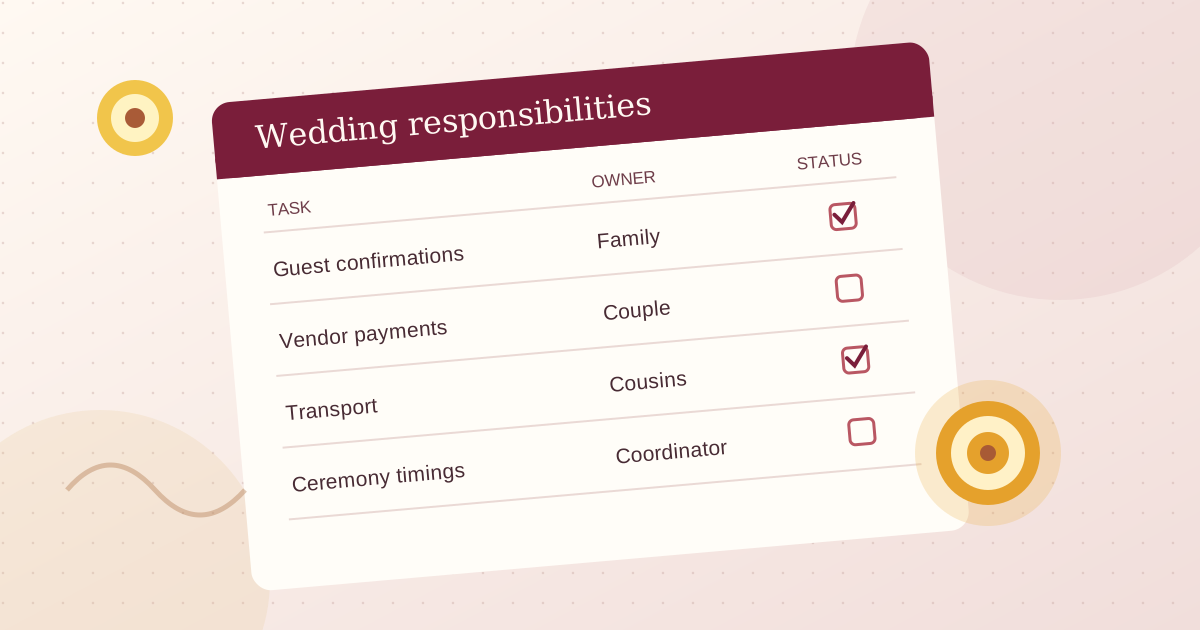
Start assigning responsibilities that should not sit with the couple on the wedding day: vendor contact, guest transport, room coordination, gifts, ritual materials and emergency decisions.
In ShaadiScheduler, keep tasks, budget, guest planning and family responsibilities connected instead of maintaining separate versions across WhatsApp, notes and spreadsheets. Create your shared ShaadiScheduler plan and assign the next actions while there is still time to change them.
2 months before: chase confirmations and remove uncertainty
- Send invitations that are still pending.
- Track RSVPs by function.
- Review room requirements and transport.
- Complete outfit fittings and accessory gaps.
- Confirm ceremony requirements and ritual materials.
- Review vendor balances and upcoming due dates.
- Check whether guest-count changes affect venue or catering commitments.
Use the budget and guest list together. Fifty extra guests can affect food, seating, rooms, transport and sometimes the venue layout, not just the per-plate bill.
1 month before: freeze major decisions
The final month should be about confirmation, not reinvention. Close major scope decisions unless there is a genuine problem to solve.
- Confirm the latest guest count and vendor headcount deadlines.
- Share the latest function schedule with vendors and family owners.
- Confirm vendor arrival, setup and teardown windows.
- Confirm transport, rooms and check-in details.
- Prepare final payment amounts and responsible payers.
- Complete trials, fittings and packing lists.
- Confirm weather backup for outdoor functions.
2 weeks before: run one cross-vendor review
Review each function from guest arrival to departure. Look for gaps between vendors rather than reviewing each vendor in isolation. Who opens the venue? Who receives the decorator? Who has the photographer's number? Who knows when the bride and groom move between locations? Who can approve an urgent expense?
Put important contacts and responsibilities in one shared place. The couple should not become the help desk for every operational question.
1 week before: protect the plan
- Confirm final guest and room lists.
- Confirm all vendor balances, payment methods and receipts.
- Share emergency contacts and responsibility owners.
- Pack ceremony items, outfits, accessories and documents by function.
- Confirm transport pickup points and timings.
- Check weather and activate backup plans if needed.
- Stop adding optional tasks unless they materially improve the wedding.
Wedding day: manage exceptions, not the entire plan
A good timeline does not guarantee that everything runs exactly on time. It makes deviations easier to handle because everyone knows the intended sequence, decision owner and next dependency.
Give vendors and family coordinators the information they need, then let the couple participate in the wedding rather than operating it.
How to compress this timeline into six months
If you have six months, combine the 12-month and 9-month phases immediately. Set the budget, guest-count range, city and date options together, then shortlist venues and date-sensitive vendors in parallel. Within the first month, aim to have the venue and key vendor availability resolved.
Do not skip contract checks, budget tracking or guest scenarios simply because the timeline is shorter. Compress waiting time, not due diligence.
Frequently asked questions
When should we start planning an Indian wedding?
Start as soon as your approximate date, city and budget direction are clear. For a larger multi-function wedding, a 9 to 12 month runway gives more time for venue and key vendor availability, but a shorter timeline can still work when priorities and decision owners are clear.
What should be booked first for an Indian wedding?
Usually confirm the date framework, budget ceiling, guest-count range and venue before locking vendors whose availability depends on the date. Then prioritise photography, catering, decor or production, makeup and entertainment based on your wedding format and what the venue includes.
When should Indian wedding invitations go out?
There is no single deadline for every wedding. Give outstation and international guests enough time to plan travel, and set your RSVP deadline before your venue and caterer need final headcounts.
When should the guest list be final?
Build it early, but expect it to evolve. Set internal freeze dates and a final RSVP deadline before vendor headcount deadlines, leaving time to resolve pending responses.
Can ShaadiScheduler create a wedding planning timeline?
ShaadiScheduler helps couples organise wedding tasks, responsibilities, guest planning, budget decisions and timelines in one shared plan. Use it to turn this guide into actions that match your wedding date and functions.
Turn the timeline into your wedding plan
The useful version of a checklist is the one your families can actually follow. Start with ShaadiScheduler, add your wedding date and functions, connect the tasks to your budget and guest plan, and keep the next decision visible to the people responsible for it.