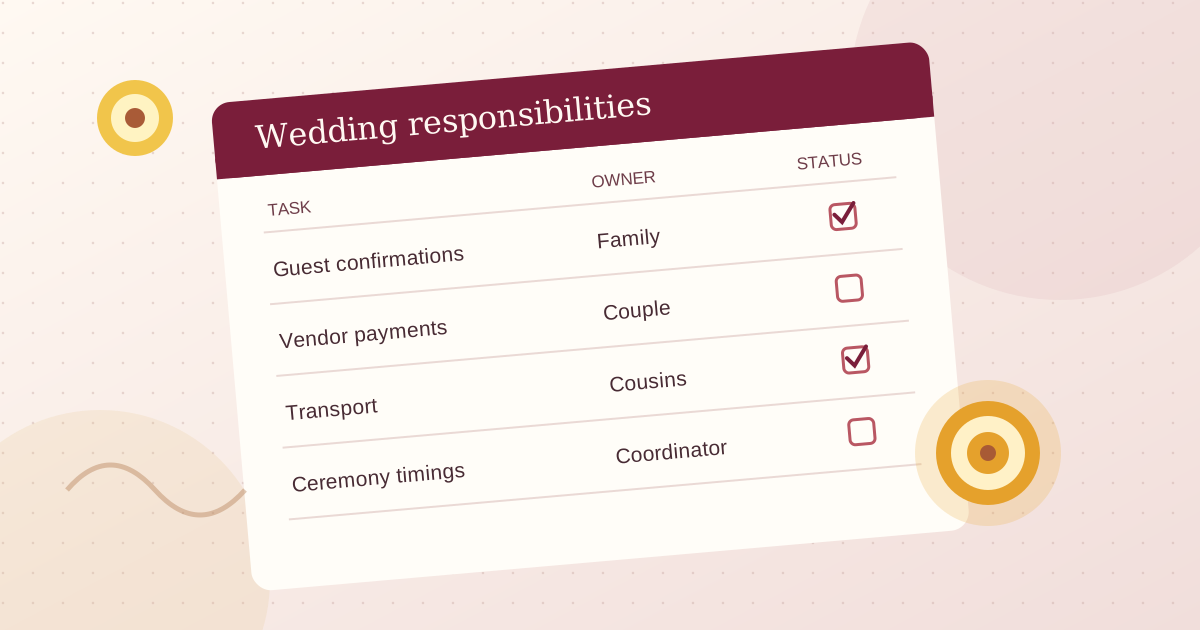
To divide Indian wedding planning responsibilities, assign one accountable owner to each task, a due date, a backup contact and a clear definition of done. Keep the couple in charge of major decisions while delegating execution to willing relatives, vendors and coordinators. A shared responsibility chart prevents duplicate calls, missed payments and last-minute family confusion.
Free Indian wedding responsibility chart template
Copy this starter table into a spreadsheet or your planning checklist. Replace example owners with names only after each person agrees.
| Task | Accountable owner | Due date | Done means |
|---|---|---|---|
| Guest list and RSVPs | One representative per family | 3 weeks before | Function-wise confirmed headcount shared with caterer |
| Vendor contracts and advances | Couple or designated payer | At booking | Signed scope, receipts and balance dates stored |
| Outstation guest rooms | Hospitality lead | 2 weeks before | Rooming list, check-in and contact details confirmed |
| Airport and station pickups | Transport lead | 1 week before | Driver assignments and arrival times shared |
| Ceremony schedule | Event coordinator | 1 week before | Vendors and key family members have one run sheet |
| Emergency kit and backup plans | On-site backup lead | 2 days before | Supplies, numbers and alternatives ready |
Who should own wedding decisions?
Separate decision rights from task execution. The couple should approve budget limits, guest-count boundaries and personal preferences. Families may manage invitation outreach, traditions and hospitality with agreed boundaries. Vendors should own contracted delivery, not family decisions.
How do you prevent confusion between two families?
- Choose one lead from each family for guest-list updates.
- Give every task exactly one accountable owner, even when several people help.
- Record the deadline and the person who can approve changes.
- Use one shared list instead of parallel WhatsApp threads.
- Hold a 15-minute weekly check-in, then daily check-ins during the final week.
What if a relative cannot complete their task?
Ask early and reassign without blame. Assign a backup to time-sensitive tasks such as transport, payments and ceremony coordination. For example, if an uncle handling airport pickups is unavailable, the transport lead can hand the confirmed arrival sheet to a hired driver. Never rely on an unconfirmed promise.
How should responsibilities change across wedding functions?
Haldi, Mehendi, Sangeet, wedding and reception may have different guest counts, vendors and locations. Make a separate owner column for each function when the same task repeats. A hospitality lead can manage hotel check-ins while a different person manages the reception welcome desk. See the wedding day run sheet for handoffs and the room allocation tracker for guest logistics.
How do you track responsibilities without another spreadsheet?
Start a free plan in ShaadiScheduler, organize tasks in your wedding checklist, keep budget decisions together and use the guest planner to align family responsibilities with real headcounts. It is a planning workspace, not an automatic replacement for conversations with relatives. For shared budget approvals, see the Indian wedding budget tracker. For guest confirmation ownership, use the RSVP tracking guide.
Frequently asked questions
Should parents or the couple manage wedding planning?
The couple should retain approval of major decisions. Parents and relatives can take ownership of agreed execution tasks, especially family outreach and traditional arrangements.
How many people should be in charge of one task?
One accountable owner is best. Other people can help, but a single person should confirm completion.
When should we assign responsibilities?
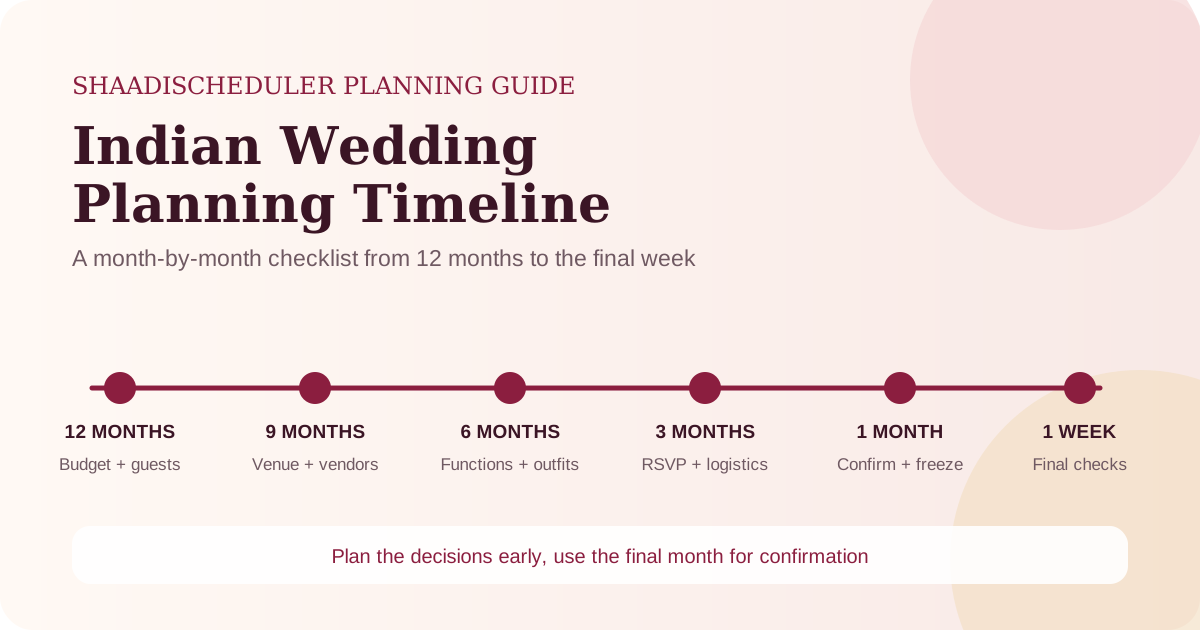
Assign major responsibilities when the venue and dates are set, then revisit assignments monthly and weekly as the wedding approaches.
Next step: Create your free ShaadiScheduler wedding plan, add your first five tasks and assign an owner and deadline to each.